Survivorship Bias: Why Indexes Always “Come Back” — But Companies Don’t
Survivorship Bias: Why Indexes Always “Come Back” — But Companies Don’t
Most investors grow up with one comforting belief:
“Markets always recover.”
It feels true.
Look at any long-term Nifty or Sensex chart—every crash seems to heal.
But this belief hides a dangerous illusion.
It is built on something called Survivorship Bias.
Let’s understand it without jargon.
The Cinema Hall Illusion
Imagine 100 people walk into a cinema hall.
Halfway through the movie, 40 walk out disappointed.
Only 60 remain till the end.
After the movie, you interview only those 60 and ask:
“Was this a good film?”
They all say yes.
You conclude:
“Everyone loved it.”
But what about the 40 who left?
They vanished from your data.
You judged reality only by those who survived.
That is Survivorship Bias.
We draw conclusions from what remains visible—and forget what disappeared.
How This Shows Up in Markets
When people say:
- “Nifty always comes back.”
- “Long-term investors always win.”
- “Time fixes all losses.”
They are looking at indexes.
An index is like a sports team.
Weak players are quietly dropped.
Stronger players are added.
So the team always looks strong.
Your stock is a single player.
If that player is injured, there is no replacement.
Indexes recover by design.
Companies recover only by merit.
The Garden Analogy
An index is a garden with a gardener.
Dead plants are removed.
Healthy plants are added.
The garden always looks green.
Your portfolio is a sealed pot.
Whatever you plant stays there—
unless you remove it.
The garden thrives automatically.
Your pot survives only by your decisions.
Why This Misleads New Investors
A beginner sees a 20-year market chart and thinks:
“Even if I lose today, time will fix it.”
Time fixes systems.
It does not fix broken businesses.
Kingfisher didn’t recover.
DHFL didn’t recover.
Jet Airways didn’t recover.
Indexes quietly removed them.
Investors carried them.
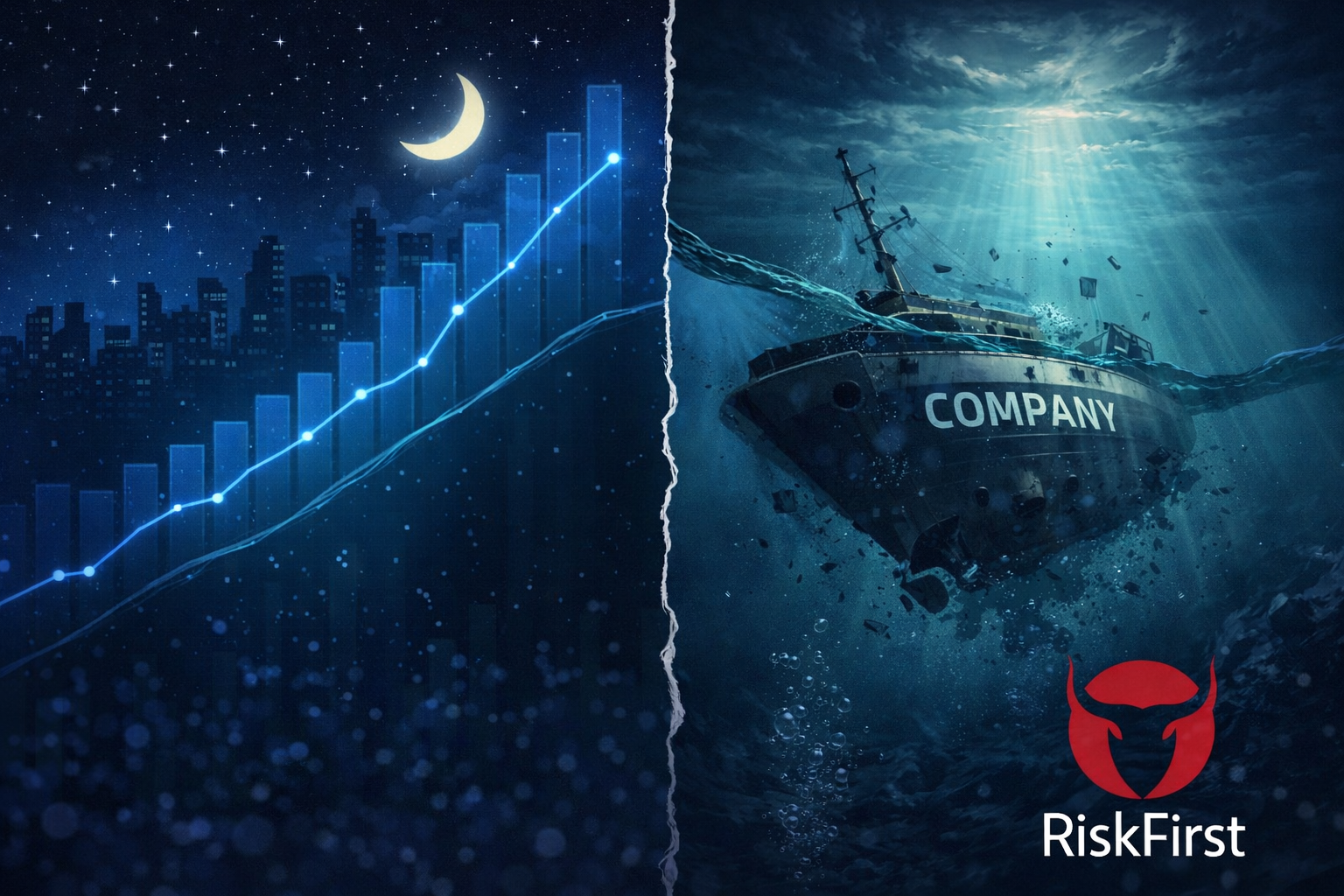
Believing “everything comes back” is like assuming
all boats float because the ocean becomes calm again.
The sea recovers.
Sunken boats do not.
The RiskFirst View
At RiskFirst, we don’t ask:
“How high can this go?”
We ask:
“What happens if this fails?”
Survivorship Bias teaches investors to:
- Ignore failure
- Over-trust recovery
- Believe holding forever is safe
A hedge-style mindset assumes:
Some positions will not survive.
So we design portfolios that:
- Limit damage from failure
- Measure downside before dreaming of upside
- Do not depend on “hope” for recovery
The Core Insight
Indexes recover because they evolve.
Your portfolio does not.
It reflects your choices.
Survivorship Bias whispers:
“Everything comes back.”
RiskFirst teaches:
“Only what deserves to survive comes back.”
Wealth is not built by those who recover fastest.
It is built by those
who never had to recover.