LICO Materials: Building India’s Lithium-Ion Battery Circular Economy
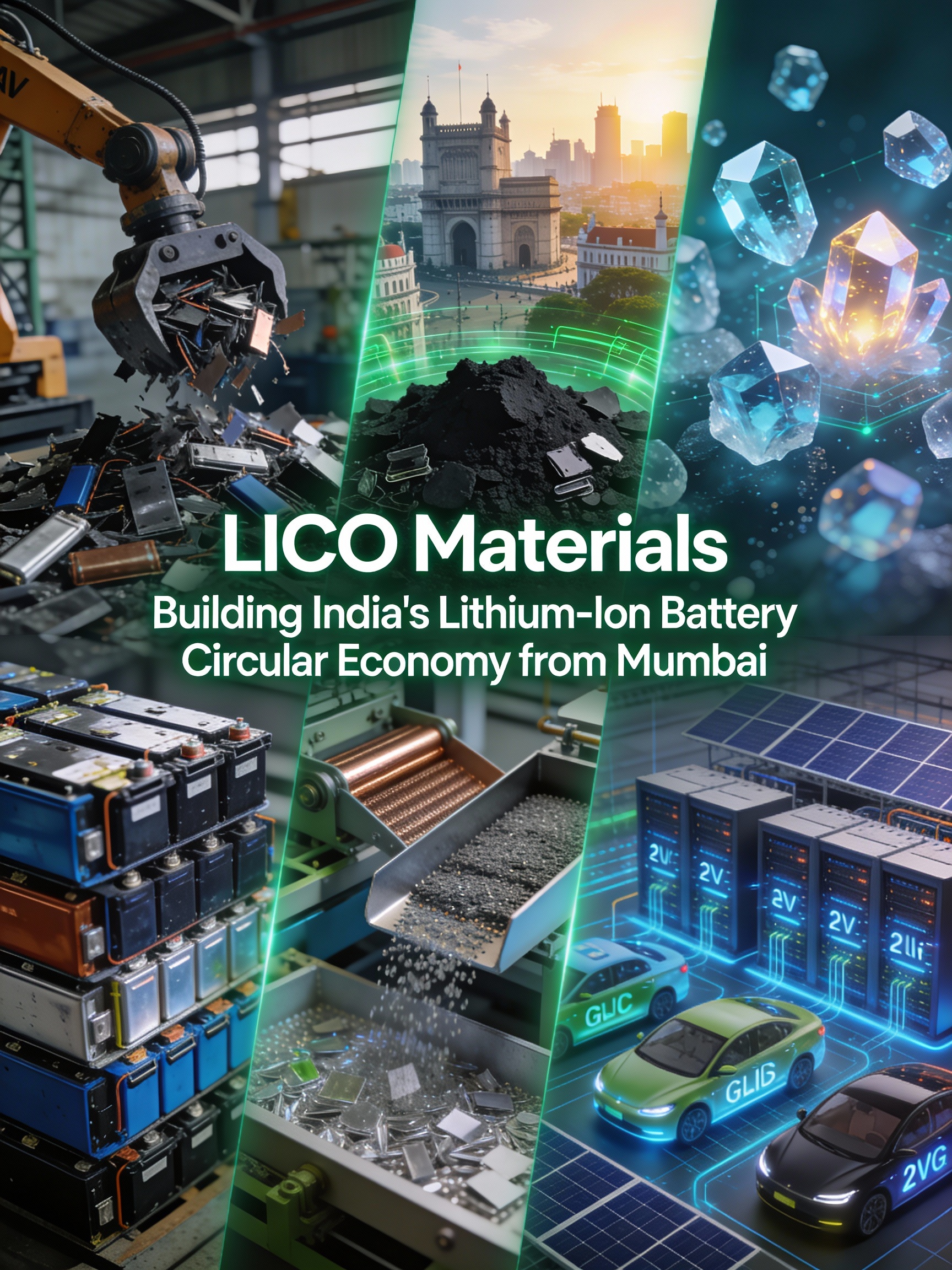
LICO Materials is a Mumbai-headquartered clean-tech recycler and repurposer of lithium-ion batteries, building a circular economy around critical minerals like cobalt, manganese, and nickel.
Powering a Greener Battery Future
LICO Materials was established in 2021 with a clear purpose: to tackle the growing environmental challenge of end-of-life lithium-ion batteries and turn them into an opportunity for sustainable growth. Operating from Third Floor, 48, Upadrastha House, Dr. Forbes Street, Kala Ghoda, Fort, Mumbai – 400001, the company serves as a bridge between discarded batteries and the next generation of clean energy technologies. Its mission is to build a resilient lithium-ion battery circular economy that supports India’s energy independence and net-zero ambitions.
As India’s EV and energy storage markets accelerate, the volume of used batteries is rising rapidly, bringing both risk and potential. LICO views every end-of-life cell not as hazardous waste, but as a valuable mine of critical minerals that can be recovered, reused, and reintroduced into the battery supply chain. This mindset is at the heart of the company’s strategy to combine recycling, repurposing, and second-life applications into one integrated solution.
Closing the Loop on Critical Minerals
At the core of LICO’s operations is high-efficiency recovery of key materials such as cobalt, manganese, nickel, and lithium from spent batteries. Using a combination of mechanical shredding, advanced separation, and hydrometallurgy (through strategic partnerships), the company recovers up to about 92% of the materials found in EV batteries, significantly reducing the need for fresh mining. Plastics, copper foils, aluminum foils, steel, and black mass are all separated and channelled back into industrial value chains, ensuring that nothing of value goes to waste.
LICO has already commissioned battery recycling and shredding capacity in India, including a facility in Karnataka and plants scaling from 3,000 metric tons per annum towards a combined 44,000 tons by 2027. These facilities are built around zero-waste and zero-discharge principles, meaning that both materials and process outputs are managed to minimize environmental impact while maximizing recovery efficiency. For battery and EV OEMs, this enables compliance with evolving regulations and Extended Producer Responsibility obligations, while securing reliable domestic sources of critical minerals.
Second-Life Energy Solutions
Recycling is only one half of LICO’s vision; the other half is repurposing batteries for second-life applications. Instead of prematurely scrapping batteries that still retain useful capacity, LICO tests, refurbishes, and reconfigures them into repurposed energy storage systems. These systems can power a diverse range of applications—from small backup devices and inverter bulbs to commercial storage and mobility solutions for two-, three-, and four-wheelers.
By extending the usable life of each battery, LICO ensures the embedded energy and materials deliver maximum value before they are finally recycled. This two-step model—second life followed by recycling—helps lower the total environmental footprint of batteries and makes clean energy solutions more affordable and accessible. It also supports grid stability and renewable energy integration by providing modular storage options tailored to India’s varied energy needs.
Technology, Scale, and Sustainability
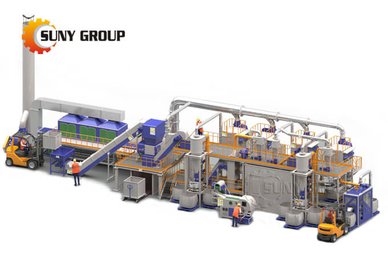
LICO’s process begins with mechanical shredding of end-of-life lithium-ion batteries, where cells are safely broken down into finely sized material. Through magnetic separation, vibration screening, and multi-stage sieving, plastics, metals, and black mass are isolated with high precision, ensuring efficient downstream processing and minimal material loss. The black mass, rich in lithium, cobalt, manganese, and nickel, is then processed further via hydrometallurgical routes through specialized partners to yield high-purity materials ready for re-entry into the battery manufacturing ecosystem.
Current capacity across its recycling and repurposing operations stands at thousands of tons per year, with clear expansion plans to reach 44,000 tons by 2027, reflecting confidence in both technology and market demand. As a member of India’s emerging reuse and recycling ecosystem, LICO positions itself as a trusted partner for OEMs seeking sustainable, traceable, and scalable solutions for their battery lifecycles. This combination of engineering competence, strong partnerships, and sustainability focus makes LICO a key player in India’s clean-tech landscape.
Partnering for a Circular Tomorrow
The global push toward non-fossil fuels and renewable energy has made responsible battery management indispensable, not optional. By investing in recycling and repurposing, LICO Materials helps Indian OEMs and energy players tap into the upcoming wave of end-of-life lithium-ion batteries as a strategic resource rather than a liability. This supports national goals around greenhouse gas reduction, import substitution for critical minerals, and the creation of green jobs in advanced recycling and energy storage.
Organizations interested in collaborating with LICO—whether for battery scrap management, second-life energy solutions, or circular supply-chain design—can connect through the company’s Mumbai headquarters at Third Floor, 48, Upadrastha House, Dr. Forbes St, Kala Ghoda, Fort, Mumbai, Maharashtra 400001, or via its website at https://licomat.com/. In doing so, they join a growing movement that treats every battery not as the end of a product’s life, but as the beginning of a more sustainable, circular future.